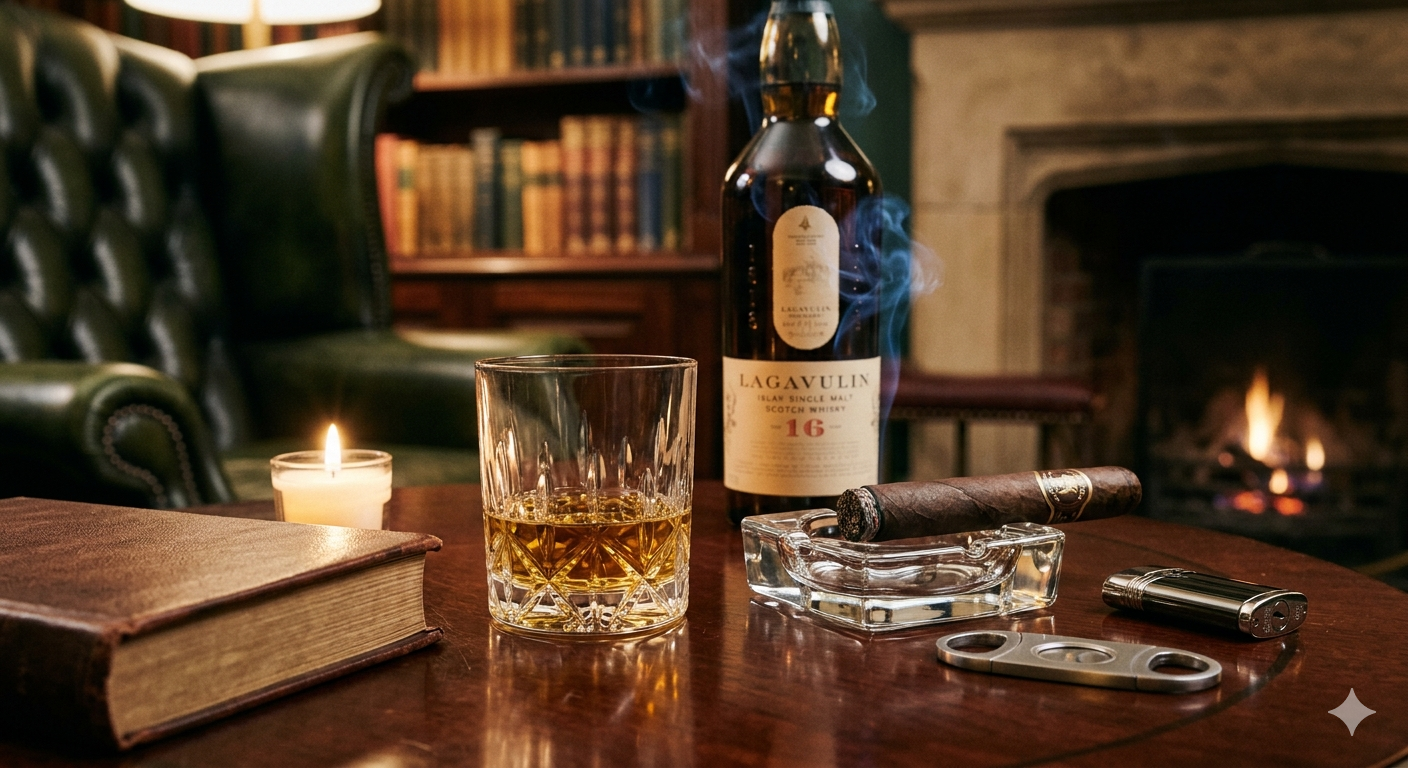
There’s a moment — maybe you’ve felt it — when the smoke from a well-chosen cigar and a lingering sip of scotch seem to finish each other’s sentences. The vanilla of the whisky softens the pepper of the wrapper. The oak of the barrel mirrors the cedar of the cap. It’s not accidental. It’s chemistry.
Pairing cigars and scotch is one of the most rewarding rituals in premium tobacco culture, and one of the most misunderstood. The instinct is to reach for the most expensive bottle on the shelf and the fullest cigar in the humidor. That instinct is usually wrong. Pairing is about harmony, not horsepower.
The Golden Rule: Match Intensity
Before you think about flavor notes, think about body. A delicate, light-bodied Connecticut-wrapped cigar will be completely steamrolled by a heavily peated Islay scotch. Conversely, a powerhouse Ligero-heavy Nicaraguan will bury a gentle Speyside single malt.
The first rule of any food and drink pairing applies here: match the intensity of both.
- Light-bodied cigars (Connecticut, Claro wrappers) → Lowland or light Speyside scotches
- Medium-bodied cigars (Natural, Colorado wrappers) → Classic Speyside, Highland, or blended malts
- Full-bodied cigars (Maduro, Oscuro wrappers) → Islay, heavily peated expressions, or aged single malts
Understanding Flavor Bridges
Once you’ve matched intensity, look for flavor bridges — shared notes that create resonance between the two. Scotch and cigars share a surprisingly large flavor vocabulary: vanilla, caramel, leather, oak, dried fruit, spice, smoke, and earth.
“The best pairings don’t compete — they converse. You’re looking for one to finish the sentence the other started.”
Here’s how that plays out in practice:
Speyside + Medium Nicaraguan
A classic Speyside like a 12-year Glenfiddich or Macallan brings honey, vanilla, and light fruit. Pair it with a medium Nicaraguan — an Oliva Serie V or a Perdomo Reserve Champagne — and the cigar’s natural sweetness and subtle pepper create a back-and-forth that keeps evolving through the second and third third.
Islay + Full-Bodied Maduro
This is the pairing that converts skeptics. The aggressive peat and brine of a Laphroaig Quarter Cask or Ardbeg 10 seems like it would clash with a dark, earthy Maduro. Instead, something remarkable happens: the cigar’s cocoa and coffee notes cut through the smoke, and the whisky’s medicinal quality takes on a sweetness it doesn’t have on its own. Try an Arturo Fuente Hemingway Maduro or a Liga Privada No. 9.
Highland + Connecticut Shade
For the lighter end of the spectrum, a floral Highland malt — Dalmore 12, Glenmorangie Original — paired with a creamy Connecticut wrapper is an exercise in elegance. Think Ashton Classic or Macanudo Cafe. Nothing dominates. Everything lingers.
What to Avoid
Not every combination works, and knowing what to avoid saves you from ruining both a good smoke and a good dram.
- Heavily sweetened blends paired with sweet Maduro — both compete for the same sugary territory and neither wins
- Young, harsh whiskies with spicy, high-ligero cigars — the harshness of both amplifies and the experience becomes aggressive rather than complex
- Blended scotch with very subtle, delicate cigars — most blends have enough alcohol heat to flatten nuance
A Practical Starting Point
If you’re new to pairing and want a reliable entry point, start here:
The Beginner’s Pairing: Monkey Shoulder Blended Malt + Oliva Serie G Torpedo. Monkey Shoulder is smooth, approachable, and affordable. The Oliva Serie G is medium-bodied with a natural Ecuadorian wrapper that brings just enough cedar and cream to complement without competing. Together they’re easy, enjoyable, and a legitimate gateway.
The Weekend Ritual: GlenDronach 12 (heavily sherried, dried fruit forward) + Padron 1964 Anniversary Series Natural. This is the pairing that makes an hour disappear. The sherry influence in the GlenDronach mirrors the Padron’s natural sweetness and its legendary construction ensures an even, unhurried burn.
The Special Occasion: Lagavulin 16 + Cohiba Behike BHK 52. Both are expensive. Both are exceptional. The Lagavulin’s peat, smoke, and dark chocolate find their match in the Behike’s complexity — medio tiempo leaves, legendary wrapper, and a finish that lasts longer than the evening. Save this one for something worth celebrating.
The Environment Matters Too
Pairing isn’t just about what’s in the glass and what’s in your hand. The environment plays a role. Cold weather suppresses volatiles in both the whisky and the smoke — flavors become tighter, more restrained. A warm evening on a patio opens everything up. Humidity affects the cigar’s draw and burn rate.
Sip slowly. Smoke slowly. Let each third of the cigar inform which note you chase in the glass. The pairing evolves as the cigar does — the first third is often the sweetest, the second the most complex, the third the boldest. Chase the whisky accordingly.
Final Thoughts
There’s no governing body for cigar and scotch pairings. No certification, no right answer, no sommelier who can tell you you’re wrong. The rules above are starting points, not law. Trust your palate. Take notes. Keep a pairing journal if you’re serious about it.
What you’re really doing is paying attention — to what you’re tasting, to how one thing changes another, to the way time slows down when you’re holding something worth savoring. That’s the art of it. The scotch and the cigar are just the medium.
-
Draw
-
Flavor
-
Construction