How to Smoke a Cigar: The Complete Beginner’s Guide
So you’re about to light up your first cigar and you have no idea what you’re doing. That’s fine. Everyone starts there. This guide walks you through picking a cigar, cutting it, lighting it, and smoking it the right way, so your first experience is a good one instead of a rough one.
Picking Your First Cigar
Your first cigar should be mild to medium in strength. A strong, full bodied cigar can hit a new smoker hard and turn you off the hobby before you even get started.
A few things to look at when you’re choosing:
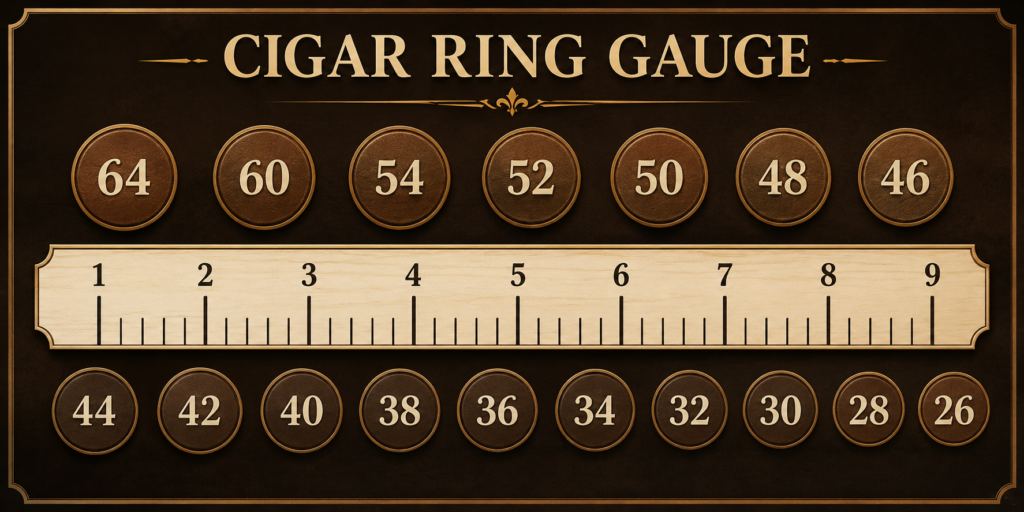
Size. Bigger isn’t better for a first timer. A Robusto or Toro (roughly 5 to 6 inches, with a ring gauge around 48 to 52) burns for 45 minutes to an hour, which is plenty of time to learn without wearing you out.
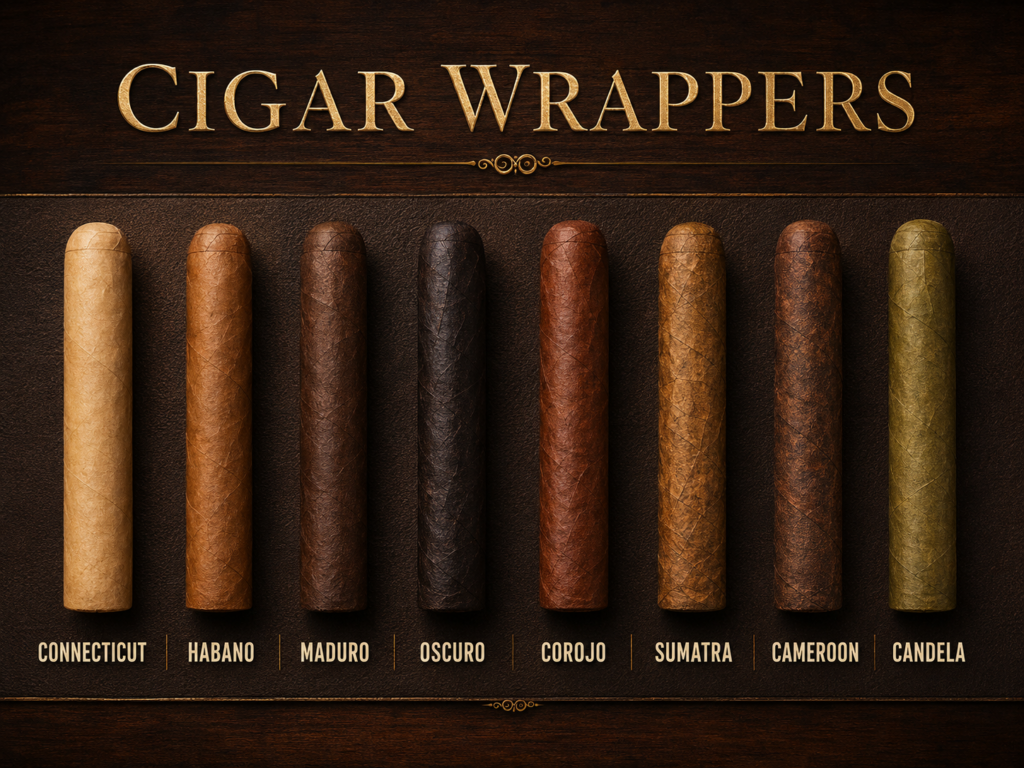
Wrapper. Lighter wrappers like Connecticut Shade tend to taste creamier and milder. Darker wrappers like Maduro usually bring more sweetness and body. Neither is “better,” they just smoke differently.
Strength. Look at the box or the shop description. Words like “mild” or “medium bodied” are your friend right now. Save the full bodied Nicaraguan sticks for later. Want a curated starting list? We rounded up our top picks for beginners here.
Cutting Your Cigar: Punch, Straight, or V-Cut
Before you light anything, you need to cut the cap off the closed end of the cigar. This opens up the draw so air (and smoke) can actually move through it.
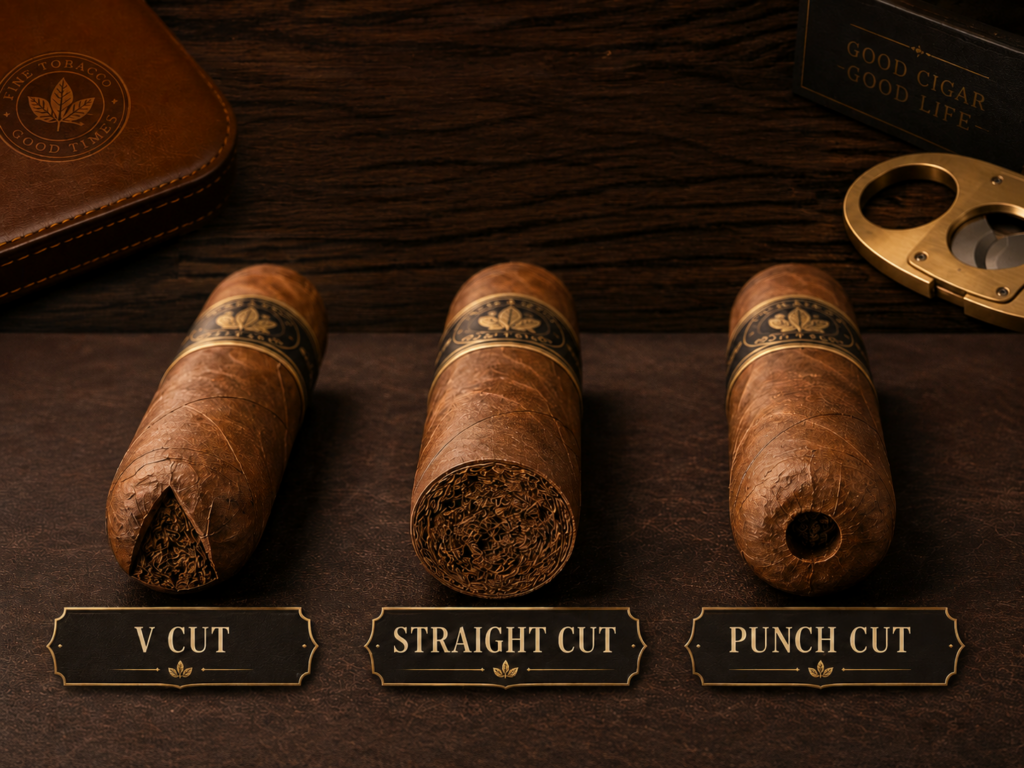
Straight (Guillotine) Cut
This is the most common cut and the easiest to get right. You’re slicing straight across the cap in one clean motion, taking off just the tip. Aim to leave most of the cap intact so the wrapper doesn’t unravel.
Punch Cut
A punch cutter removes a small circle from the center of the cap instead of slicing the whole top off. It’s harder to mess up and it’s a good option if you’re nervous about cutting too much.
V-Cut
This carves a small wedge into the cap, which can concentrate the smoke and change how the flavor hits your palate. It’s a nice option once you’ve smoked a few cigars and want to experiment.
We go into a lot more depth, including no cutter methods for when you’re caught without one, in our full guide to cutting a cigar.
Toasting the Foot and Lighting Properly
This is the step most beginners rush, and rushing it is what leads to an uneven burn later on.
Hold the cigar at a slight angle, just above the flame, without letting the flame touch the tobacco directly.
Rotate the cigar slowly so the entire foot (the end you light) gets an even, light char. This is called toasting.
Once the foot is toasting evenly, bring the cigar to your mouth and puff gently while rotating it near the flame until it’s fully lit.
Check the burn. It should be even all the way around. If one side is burning faster, you can touch it up now before it gets worse.
A torch lighter works better than a regular lighter or matches because it burns hotter and more evenly, and it’s less likely to add a fuel taste to the tobacco. Here’s what we recommend for a first torch lighter.
Draw, Pace, and Ash Management
Draw is the resistance you feel when you puff. A good cigar should pull smoothly, not like you’re sucking through a straw and not so loose that it burns hot. If your cigar is drawing too tight, a few gentle puffs usually clears it up.
Pace matters more than people expect. Puff about once a minute, maybe once every 45 seconds. Smoking too fast makes the cigar burn hot, which brings out a bitter, harsh taste. Slow down and let it rest between puffs.
Ash doesn’t need constant attention. Let it build up on its own. It actually helps insulate the burning tobacco and keeps the temperature steady. Most cigars can hold an inch or more of ash before it’s ready to fall. Tap it gently into an ashtray when it looks ready, no need to flick it every few minutes.
When to Put It Down
You don’t have to smoke a cigar all the way to the nub. In fact, most experienced smokers don’t. As you get within the last third or so, the flavor tends to get harsher and hotter since you’re smoking closer to where the wrapper meets your hand. When it stops tasting good to you, that’s your signal. Set it down. There’s no rule that says you have to finish it.
Common Beginner Mistakes
Inhaling. Cigars aren’t meant to be inhaled like a cigarette. You draw the smoke into your mouth, taste it, and let it out. Inhaling can make you feel sick fast, especially on a stronger cigar.
Smoking too fast. Covered above, but it’s worth repeating because it’s the number one thing that ruins a first cigar experience.
Relighting the wrong way. If your cigar goes out, that’s normal, especially early on. Tap off any loose ash first, then relight the foot the same way you did originally, with slow rotation over the flame. Don’t just jam the whole end into the fire.
Choosing something too strong. If your first cigar leaves you dizzy or queasy, it probably wasn’t the mild pick it should have been. Nicotine on an empty stomach makes this worse too, so eat something beforehand.
Do’s and Don’ts of Smoking a Cigar
Do hold the cigar between your fingers, not clenched between your teeth. You’ll get a better sense of how hot it’s burning and how the draw feels.
Do puff slowly, about once every 30 to 60 seconds. This is the single biggest thing that separates a smooth smoke from a harsh one. At the end of the day though, do whats best for you.
Do rotate the cigar while you’re toasting and lighting it so the foot burns evenly all the way around.
Do let the ash build up on its own, generally to about an inch, before tapping it off gently. It helps keep the burning tobacco insulated and the temperature steady.
Do eat something before you smoke. Nicotine on an empty stomach is a common reason beginners feel queasy or lightheaded.
Do let a half smoked cigar go out naturally if you need to step away, rather than stubbing it out like a cigarette. You can relight it later the same way you lit it the first time.
Don’t inhale. Cigar smoke is meant to be tasted in your mouth, not pulled into your lungs.
Don’t touch the flame directly to the tobacco. Hold it close and rotate instead of letting the tobacco sit in the fire, which scorches it unevenly.
Don’t puff quickly just to keep the cigar lit. A cigar that’s been left alone for a minute or two isn’t going out for good, and rushing it just makes the smoke hot and bitter.
Don’t smoke all the way down to the nub. The flavor turns harsh in the last inch or so for most cigars, so there’s nothing wrong with setting it down early.
Don’t whack the cigar against the ashtray to knock the ash off. A firm hit can crack the wrapper. A gentle tap is all it takes.
Frequently Asked Questions
How do you smoke a cigar properly? Cut the cap, toast the foot evenly, light it with slow rotation, then puff slowly (about once a minute) without inhaling. Let the ash build up naturally and stop smoking once the flavor turns harsh near the end.
How old do you have to be to smoke a cigar? In the United States, the federal minimum age to legally buy any tobacco product, including cigars, is 21. This has been federal law since December 2019. Some states and cities may have their own rules on top of that, so it’s worth checking local laws too.
How long does it take to smoke a cigar? It depends on the size, but a Robusto or Toro usually takes 45 minutes to an hour. Smaller cigars can be done in 20 to 30 minutes, while bigger Churchills or Gordos can run well over an hour.
How far down should you smoke a cigar? Most people stop with the last inch or two unsmoked. Once you get close to the band, the flavor usually turns hot and bitter, so there’s no need to push through to the very end.
Should you inhale a cigar? No. Cigar smoke is meant to be tasted in your mouth, not pulled into your lungs. Inhaling can cause lightheadedness or nausea, especially for new smokers.
When should you stop smoking a cigar? Whenever it stops tasting good to you. For most cigars, that happens somewhere in the final third. Trust your palate over any strict rule about how much you “should” finish.
Ready to Log Your First Cigar?
Your first cigar won’t be perfect, and that’s okay. Every experienced smoker started exactly where you are now. The best way to actually improve is to pay attention each time: what you liked, what you’d change, and what to try next.
Log your first cigar in your Virtual Humidor and see what other beginners are smoking. Create your free Stogie Spot account and start building your smoking history from day one.
8 Best Cigar of the Month Clubs
A great cigar of the month club does the hunting for you. Instead of scrolling endless online catalogs or smoking the same three sticks from the local shop, a monthly cigar club drops a curated selection at your door — sometimes rare and aged finds, sometimes dependable big-brand favorites, often cigars you simply cannot buy in stores.
But the clubs themselves vary wildly. Prices run from $20 to more than $150 per shipment. Some ship monthly, others quarterly or every other month. Some chase boutique exclusives while others lean on household names. We dug into eight of the most talked-about cigar subscriptions, verified current pricing and shipment details directly from each club (as of June 2026), and laid out the honest pros and cons of each so you can pick the one that fits how you actually smoke.
Rare, aged, and exclusive releases with tasting cards
Cigars International COTM Club
~$21.99/mo
Monthly
4 or 8
Big-brand value and free shipping on every box
DROP Cigar Club
Waitlist
Quarterly
Varies
Members-only exclusive blends (Warped collabs)
Black Box Cigar Club
$44.95/mo
Monthly
Varies (value exceeds price)
All-boutique brand discovery
JR Cigars COTM Club
$30.95/mo
Monthly
5 (6 for JR Plus members)
Backed by the world’s largest cigar store
Pricing and details verified June 2026 from each club’s official website. Clubs run frequent promotions, so check current offers before joining.
How We Evaluated These Cigar Subscriptions
This is an unranked roundup — each of these clubs is the right choice for a different kind of smoker, and pretending one club wins for everybody would be dishonest. For every club we looked at five things: price per cigar and overall value, the quality and uniqueness of the curation, shipment frequency and flexibility (can you skip, pause, or cancel easily?), how the cigars are protected in transit (humidification matters more than most new subscribers realize), and the extras — tasting notes, education, community, and gifting options.
Hooten Young Cigar Operations Club
Best for: Fans of veteran-owned brands who want exclusive small-batch releases and don’t need a box every month (This is the club, I’m apart of and its GREAT!)
Hooten Young was co-founded by retired U.S. Army Master Sergeant Norm Hooten — the real-life “Hoot” portrayed in Black Hawk Down — and the brand’s military heritage runs through everything it does, including its subscription. The Cigar Operations Club launched on Black Friday 2025 and is the newest club on this list.
One thing to know up front: despite often being lumped in with monthly clubs, this is a bi-monthly program. Shipments go out six times a year (February, April, June, August, October, and December in 2026), and membership slots are limited. Three tiers are offered — priced at $60, $115, and $155 per shipment — with higher tiers unlocking expanded quantities, duplicate exclusive blends, and bi-monthly Hooten Young swag or accessory gifts. Every box includes club-exclusive small-batch releases, limited editions, tasting notes, and pairing guidance, and the company runs a bi-monthly “Fireside LIVE” show on YouTube and Facebook that takes members behind the scenes of each release.
Key details
Bi-monthly shipments (6 per year), not monthly — 2026 drops in Feb, Apr, Jun, Aug, Oct, Dec
Three tiers: $60, $115, and $155 per shipment
Club-exclusive small-batch blends, limited editions, tasting notes, and pairing guidance
Membership slots are limited; mid-year joiners wait for the next scheduled drop
Pros
Veteran-founded brand with an authentic story and a mission supporting military causes
True exclusivity — small-batch cigars blended solely for members
Fireside LIVE show adds education and community most clubs lack
Tiered structure lets you scale up (or stay casual) without switching clubs
Frequently adding new cigars
Cons
Bi-monthly cadence means only six deliveries a year — not ideal if you want a steady monthly ritual
Single-brand curation: every cigar is Hooten Young, so there’s less variety of blenders than multi-brand clubs
Newest club on this list (launched late 2025), so there’s a shorter track record to judge
Limited membership slots and shipment cutoffs can delay your first box by months
Good Cigar Co.
Best for: Casual and on-the-go smokers — and anyone without a humidor
Good Cigar Co. solves the problem most new subscribers don’t see coming: where do you keep the cigars? Its subscription ships with a humidified tube that keeps cigars fresh for up to a year, no humidor required — which is why the brand markets itself around the golf course, the lake, and the home bar rather than the walk-in humidor.
The subscription itself is simple. Pick your intensity — Mild to Medium, Variety, or Medium to Full — and receive four cigars for $34.99 a month or eight for $59.99 (the eight-count sends two of each selection). Your first shipment is a genuine welcome kit: cigars, a cutter, matches, the humidified storage tube, and detailed cards on each cigar. The first box ships within two business days, subsequent boxes arrive the last week of each month, and there’s no commitment — cancel anytime.
Key details
4 cigars/month for $34.99 or 8 cigars/month for $59.99
Choose a strength lane: Mild to Medium, Variety, or Medium to Full
Welcome kit includes a cutter, matches, and a humidified tube (keeps cigars fresh up to a year)
No commitment; first box ships within two business days
Pros
Best club on this list for beginners — no humidor or accessories needed to start
Strength preference puts you in control of what arrives
Generous welcome kit adds real first-month value
Clean, simple pricing with no tiers to decode
Cons
Selections rotate around Good Cigar’s own three blends (Apex, Voyage, Rove) and curated picks — less brand discovery than boutique-hunting clubs
~$8.75 per cigar on the 4-pack is fair but not a bargain
Experienced smokers chasing rare or aged sticks will likely outgrow it
CigarClub.com
Best for: Smokers who want personalized picks that improve over time
Founded in 2016 and now serving more than 20,000 members, CigarClub.com built its reputation on personalization. New members take a palate quiz, and every cigar that arrives can be rated through the club’s “Rate My Cigars” portal — feedback that shapes future boxes. It is the closest thing the cigar world has to a recommendation algorithm with a human curator behind it.
The flagship Explorer club ships monthly with a rotating theme — a region, a blender, a story — in 3, 5, or 10 cigar sizes ($29.99, $44.99, and $89.99 per month respectively, with themed pricing from $34.99 on some plans). Above that sit two specialty tiers: BLACK, a quarterly no-budget-limit club from $59.75 per quarter for serious palates, and Customs, a bi-monthly club (from $54.99 per collection) featuring exclusive blends made only for members and not sold anywhere else.
Founded in 2017 by Brian Desind, Privada has grown into what it bills as the largest cigar subscription in America — and it earned that position by being the discovery club. The flagship Rare Box ($28.99/month) delivers three cigars drawn from cult classics, boutique releases, defunct brands, and exclusives made just for Privada by names like Room101, Padilla, and Black Label Trading Co. Every cigar is aged in Privada’s private collection of over three million cigars before it ships.
Privada’s famous tasting cards elevate each box: flavor breakdowns, cold draw notes, pairing suggestions, and the backstory of how each cigar was found. Everything ships in Boveda humidity-controlled packaging with same-day shipping on weekday orders. Beyond the Rare Box, budget-minded smokers can grab Farm Rolled ($20/month for four band-less cigars from the same factories that roll the big brands) or Brian’s Box ($27.99/month for fresh finds), and members can skip, pause, or cancel from the account dashboard anytime.
Key details
Rare Box: $28.99/month for 3 rare, aged, or exclusive cigars (plus shipping)
Cigars International is one of the largest cigar retailers in the country, and its Cigar of the Month Club leans on that scale. Each month members receive a selection pulled from CI’s massive inventory of premium and super-premium brands — think Macanudo, Romeo y Julieta, Rocky Patel, Cohiba, Gurkha, La Gloria Cubana, and Tatuaje.
Two formats are offered: the Original Club with four cigars (one each of four brands) and the Double Decker with eight (two each of four brands). CI advertises club pricing starting at $21.99 per month, with free shipping on every club shipment, a free cigar cutter in your first month, a members-only newsletter, and member discounts. You can choose a fixed subscription length or run month-to-month. One regulatory note: CI does not ship tobacco to South Dakota or Utah.
Key details
Original Club: 4 cigars/month (1 each of 4 brands); Double Decker: 8 cigars/month (2 each of 4 brands)
Advertised starting price of $21.99/month — among the cheapest cigar of the month clubs
Free shipping on every club shipment, free cutter in month one, member discounts and newsletter
Fixed-length or month-to-month plans; no tobacco shipping to SD or UT
Pros
One of the lowest costs per cigar of any major club
Free shipping on every shipment with no minimums
Recognizable, widely rated brands — easy to research what you’re smoking
Flexible terms make it a low-risk first subscription or gift
Cons
Little exclusivity — these are cigars you could buy yourself from CI’s site
Curation is value-driven rather than adventurous; boutique hunters will be bored
Third-party review sites have flagged occasional freshness complaints and unclear refund terms at CI, so inspect your first box closely
DROP Cigar Club
Best for: Boutique devotees willing to wait for a quarterly, members-only experience
DROP Cigar Club operates more like a limited-release label than a traditional subscription. The club is closely associated with celebrated boutique maker Warped Cigars and house lines like Gellis Family and Avowed, and its store sells small-batch releases — La Colmena, Isla del Cocodrilo, Moon Garden — that sell out quickly.
Here’s the catch: the DROP subscription is quarterly, not monthly, and as of June 2026 it is closed to new members — you join a waitlist and get notified when slots open. Each quarterly shipment features exclusive blends crafted solely for members or resurrected blends “from the depths” of DROP’s archives. Every order ships packed with Boveda humidity packs, and orders over $99 ship free.
Key details
Quarterly shipments (4 per year), not monthly
Currently waitlist-only — subscription slots open periodically
Member-exclusive blends and revived limited releases, with strong Warped Cigars ties
All orders packed with Boveda; free shipping over $99
Pros
Some of the most coveted boutique blends in the subscription world
True member exclusivity — these cigars aren’t repackaged retail stock
Boveda in every box protects the cigars in transit
The storefront lets you buy acclaimed small-batch releases even without a membership
Cons
Quarterly-only cadence — just four shipments a year
You can’t actually join right now; the waitlist has no published timeline
Pricing isn’t displayed until slots open, making it hard to budget
Premium boutique pricing throughout the store (~$9–18 per cigar)
Black Box Cigar Club
Best for: Adventurous smokers who want to discover small boutique brands they’ve never heard of
Black Box Cigar Club has one clear mission, in its own words: exposing cigar lovers to boutique cigar brands. Each $44.95 monthly box is built around small and up-and-coming makers from across the country — its online humidor stocks over 130 cigars from names like ATL Cigar Co., Aganorsa Leaf, ADVentura, 2nd City, and BAMF — and the club promises the retail value of every box exceeds the subscription price.
Boxes arrive themed (past editions include “Black Magic” and “Return of the King”) with descriptions and tasting notes for every cigar, and the site sells past boxes individually so you can sample before subscribing. Gifting is well covered too: a one-time gift box runs $159.95, and a three-month gift subscription is $175.85 with a fourth month free. A quirky $1.50/month raffle club and a $589.99 annual “Tasters Choice Club” round out the lineup.
Key details
$44.95/month; retail value of contents guaranteed to exceed the price
Focus is exclusively boutique brands, with tasting notes in every themed box
JR Cigars — the self-proclaimed “World’s Largest Cigar Store,” in business since 1971 — relaunched its Cigar of the Month Club with upgraded curation and packaging. Each month the JR team works with major manufacturers to select five of the highest-rated and most popular premium cigars, shipped in a custom heat-sealed bag inside a custom shipper box.
The recurring plan is $30.95 per month. Prepaying unlocks a 10% discount (about $27.95/month) plus a free gift worth over $60 in your first box. JR Plus loyalty members get a sixth cigar added to every shipment at no extra charge. JR also surrounds the club with strong educational content — past selections, the Blending Room blog, and JR University — which makes it a comfortable on-ramp for newer smokers.
Key details
$30.95/month recurring for 5 premium cigars; prepay for ~$27.95/month (10% off) plus a $60+ first-box gift
JR Plus members receive a 6th cigar in every shipment
Custom heat-sealed bag and shipper box; selections from top-rated mainstream manufacturers
Backed by JR’s enormous inventory, loyalty program, and educational resources
Pros
Solid per-cigar value (~$5.60–6.20/stick), especially for JR Plus members
Highly rated, recognizable cigars with very little risk of a dud box
Prepay discount and first-box gift sweeten the deal
Excellent supporting content for learning as you smoke
Cons
Mainstream curation — aficionados won’t find rare or exclusive sticks here
JR’s earlier club iteration drew complaints (the company itself acknowledged and relaunched it), and third-party reviewers have criticized JR’s customer-service ratings
Best value requires either prepaying or maintaining a JR Plus membership
How to Choose the Right Monthly Cigar Club
Start with honesty about how much you smoke. If you light up once or twice a week, a 3–5 cigar monthly club (Privada, CigarClub.com, JR) keeps pace without overflowing your humidor. Daily smokers should look at 8–10 count options (Good Cigar Co.’s 8-pack, CI’s Double Decker, CigarClub’s 10-count Explorer) or supplement a club with à la carte buying.
Then decide what “discovery” means to you. If it means rare, aged, can’t-buy-this-anywhere sticks, Privada, DROP, and CigarClub Customs are built for that. If it means sampling boutique brands, Black Box is the specialist. If it means working through well-known, highly rated brands at the best price, Cigars International and JR deliver exactly that. And if it means a story-driven brand experience, Hooten Young’s tiered, mission-driven club stands alone.
Finally, check the logistics most people skip: Is shipping included or extra? Does the club use Boveda or humidified packaging (critical in summer heat and winter dryness)? Can you skip, pause, or cancel online? And is it actually monthly — remember that Hooten Young is bi-monthly and DROP is quarterly, which changes the math on annual cost.
Frequently Asked Questions
What is the best cigar of the month club for beginners?
Good Cigar Co. is the easiest starting point because the welcome kit includes a cutter, matches, and humidified storage — you need nothing else to begin. CigarClub.com is a close second thanks to its palate quiz, which prevents the classic beginner mistake of getting full-bodied cigars before you’re ready for them.
What is the cheapest cigar of the month club?
Among the clubs in this roundup, Privada’s Farm Rolled tier is the cheapest at $20/month for four unbanded premium cigars, followed by Cigars International’s club, which advertises pricing from $21.99/month for four name-brand cigars with free shipping.
Are cigar subscriptions worth it?
It depends on what you’re buying access to. Clubs like Privada, DROP, and Hooten Young deliver cigars you genuinely cannot buy at retail, so the value is access and curation. Value clubs like CI and JR mostly save you decision-making time rather than money. Run the per-cigar math: anything between $5 and $9 per premium stick delivered is competitive with retail.
Do cigar clubs make good gifts?
Yes — a cigar of the month club gift is one of the few subscriptions that feels more premium each month it arrives. CigarClub.com (gifts from $109 with a recipient-matching quiz), Black Box (one-time $159.95 box or 3-month gift), and Cigars International (flexible 2–12 month terms) have the strongest dedicated gifting programs.
How do clubs keep cigars fresh during shipping?
The better clubs ship with humidity control: Privada, DROP, and Black Box-style boutique clubs use Boveda two-way humidity packs, while Good Cigar Co. includes a humidified tube rated to keep cigars fresh up to a year. If a club says nothing about humidification, ask before subscribing — a dried-out premium cigar is a wasted premium cigar.
Can I cancel a cigar subscription anytime?
Most clubs here are no-commitment: Privada, Good Cigar Co., CigarClub.com, and CI’s open membership all allow online skip, pause, or cancellation. The exceptions are prepaid terms (JR’s discounted prepay, gift subscriptions) and limited-slot clubs like Hooten Young and DROP, where leaving may mean rejoining a waitlist later.
Final Thoughts
There’s no single best cigar of the month club — there’s the best club for the way you smoke. Chase rarity with Privada or DROP. Learn your palate with CigarClub.com or Good Cigar Co. Stretch your budget with Cigars International or JR. Hunt boutiques with Black Box, or buy into a story with Hooten Young. Whichever you choose, start month-to-month where possible, rest your first box in proper humidity, and give any club at least three shipments before judging the curation — that’s how long it takes to see whether a club is matching you or just shipping you inventory.
All pricing, shipment frequencies, and program details in this article were verified against each club’s official website in June 2026. Clubs change pricing and promotions frequently — always confirm current terms before subscribing.
What Is a Stogie? The Definitive Guide to Stogie Cigars
Everyone’s heard the word. You picture a grizzled cowboy with a cigar clamped between his teeth, or a backroom politician shrouded in smoke. The word *stogie* is baked into American culture — but most people who use it have no idea where it came from, or exactly what it means.
This guide covers it all: the stogie meaning, its origins in the American frontier, the different types of stogie cigars you’ll encounter today, and how to choose one — whether you’re completely new to cigars or just looking for a casual smoke without spending a fortune.
—
What Is a Stogie? The Short Answer
A **stogie** (also spelled *stogy*) is a slang term for a cigar. In everyday use, it can mean just about any cigar — but it carries an implied informality. The word suggests something approachable, unpretentious, and casual. When someone says “grab a stogie,” they’re not talking about a $30 hand-rolled stick from a humidity-controlled humidor. They’re talking about a porch smoke.
That said, both uses are technically correct. Merriam-Webster defines stogie as *”a long slender cigar,”* but also accepts it as a general synonym for cigar. So calling any cigar a stogie isn’t wrong — it just communicates something about the vibe.
The simplest definition: A stogie is any cigar, especially one that’s long, thin, affordable, or smoked casually.
—
Stogie Meaning: Where Does the Word Come From?
To understand the stogie meaning, you need to go back to 18th-century Pennsylvania.
The Conestoga wagon — that iconic canvas-covered freight vehicle — was manufactured primarily near Conestoga, a community in Lancaster County, Pennsylvania. These wagons were the workhorses of early American commerce and westward expansion. The men who drove them were called teamsters, and they spent long days on rough roads hauling goods across the frontier.
To pass the time, they smoked. Their cigars of choice were long, thin, inexpensive, and practical — the kind of cigar that didn’t require careful storage and wouldn’t crumble after a day bouncing down a dirt trail.
Over time, those cigars picked up the name of the wagons. *Stogie* — shortened from *Conestoga* — first appeared in print around 1835 as an adjective meaning “rough” or “coarse,” initially applied to the thick, durable boots that teamsters wore. By 1861, it was being used to describe their cigars, too. By 1869, *stogie* had entered common American usage as a noun meaning a long, cheap cigar.
Lancaster County, incidentally, was also home to one of the earliest and most productive cigar-manufacturing regions in the country at the time — so the geography makes sense.
Stogie = Conestoga → wagon drivers → the cigars they smoked → any cigar.
—
Is a Stogie a Cigar?
Yes — all stogies are cigars, but not all cigars are stogies.
Think of it like sparkling wine and champagne. Champagne is sparkling wine, but calling a bottle of Cristal “sparkling wine” misses the point. In the same way, calling a Liga Privada No. 9 a “stogie” is technically accurate but tonally off. The term doesn’t honor what that cigar represents.
For everyday smokes, budget picks, machine-made sticks, or casual occasions — “stogie” fits perfectly.
—
Types of Stogie Cigars
When people reach for something they’d call a stogie, they’re typically choosing from one of these styles:
The classic long stogie
Long (6–8 inches), thin (ring gauge 32–38), and straight. This is the closest modern equivalent to what Conestoga teamsters actually smoked. Mild to medium strength, fast-burning, and no-fuss. Perfect for when you want a smoke but don’t want to commit to an hour-long session.
Italian-style dry-cured cigars
Brands like Toscano, Toscanello, and De Nobili are the spiritual descendants of the original stogie. They’re fire-cured or dry-cured rather than fermented, which gives them a distinctive sharp, rustic character. Often smoked halfway and extinguished, then re-lit. These are an acquired taste — not the place to start if you’re brand new — but beloved by those who appreciate their old-world character.
Machine-made budget cigars
The contemporary stogie. Consistent, widely available, and inexpensive. These range from gas-station-counter smokes to surprisingly solid options in the $3–8 range. If someone offers you a stogie at a backyard barbecue, this is probably what they mean. [See our budget cigar reviews →]
Cigarillos
Smaller than a full-size cigar — usually under 4 inches — and often machine-made. Frequently lumped under the stogie umbrella in casual conversation. Good entry point for beginners who want to try a cigar without committing to a 45-minute smoke.
Cheroots
An old-world style with both ends open — no cap, no tapered head. Associated with Southeast Asia and historically with the American South. Often classed as stogies in the broader sense. If you’ve seen old Western films where a character has a stubby, straight-cut cigar in his mouth, that’s usually a cheroot.
—
How to Choose a Stogie
If you’re new to cigars, a stogie-style smoke is one of the best places to start. Low price, low stakes, and forgiving if you make a mistake. Here’s what to pay attention to:
Strength. Most classic stogies are mild to medium. If you’ve never smoked before, start on the milder end. A full-bodied cigar on an empty stomach can make you feel sick — not the experience you’re after. Our beginner cigar guide breaks this down in more detail.
Size. Thinner cigars burn hotter and faster. Thicker ones (higher ring gauge) burn cooler and give you more time to enjoy the smoke. For a classic stogie, a corona or lancero vitola — long and thin — is the traditional shape.
Wrapper color. This is the quickest shorthand for flavor profile. Light (claro) wrappers tend to be mild and slightly grassy. Medium brown (colorado) is versatile and the most common. Dark (maduro) wrappers are fermented longer, which often makes them sweeter and fuller-bodied, despite looking more intense.
Construction. Before lighting, gently squeeze the cigar along its length. It should feel firm and consistent — no soft spots, which indicate air pockets, and no hard lumps, which mean uneven filling. A poorly constructed cigar draws badly and burns unevenly.
Budget. The whole spirit of a stogie is accessibility. You don’t need to spend more than $5–10 for a solid casual smoke. Spending more doesn’t hurt, but it’s not required to have a good time.
—
Stogies in American Culture
The stogie’s cultural staying power comes from its democratic character. While Cuban cigars became symbols of wealth and exclusivity, the stogie was the cigar of wagon drivers, coal miners, baseball managers, and small-town politicians. It showed up in Mark Twain’s writing, in Groucho Marx’s act, and in the mouths of generals on the front lines.
That working-class DNA never entirely washed out. Even today, the word *stogie* signals approachability. It takes the pretension out of cigar smoking. When someone says “come have a stogie with me,” they’re inviting you to relax — not to perform.
It’s worth noting that premium cigar companies almost universally avoid the word. The connotation of cheapness makes “stogie” commercially undesirable if you’re selling $25+ cigars. That’s exactly why it remains so useful for everyone else: it tells you this is going to be an easy, unpretentious smoke.
—
Frequently Asked Questions About Stogies
Is “stogie” an insult?
Context-dependent. Calling a friend’s prized Davidoff a “stogie” might land as mildly dismissive — not because the word is negative, but because it doesn’t acknowledge the cigar’s quality. For everyday smokes, the word is completely neutral, even affectionate.
Is it spelled stogie or stogy?
Both are correct. Merriam-Webster accepts both. “Stogie” is far more common in modern writing and what most people search for online.
Are stogies lower quality than cigars?
Not necessarily — the term has evolved past its origin as a descriptor for cheap smokes. Traditional stogie-style cigars are genuinely different from premium hand-rolled cigars, but neither is objectively better. They serve different occasions.
What’s the difference between a stogie and a cigarillo?
Mostly size. A cigarillo is smaller — usually under 4 inches, thin ring gauge. A stogie can refer to any cigar, but often implies something larger and more rustic than a cigarillo.
Can beginners smoke stogies?
Absolutely — they’re one of the better starting points. Stick to a mild machine-made or a shorter cigarillo, don’t inhale, and pair it with something to drink. Our beginner’s guide has everything you need to know before your first smoke.
—
The Bottom Line
A stogie is a cigar — specifically one with a certain blue-collar, no-frills spirit that traces back to 19th-century Pennsylvania wagon drivers. The word has stretched over time to cover almost any cigar in casual conversation, but its cultural DNA is still intact: a stogie is an accessible smoke, a shared ritual, something you light up without overthinking it.
If you’re ready to pick one out, start with our cigar reviews — we cover everything from the best budget stogies to hand-rolled options worth stepping up to when you’re ready.
The Best Cigar Accessories for Beginners — A Complete Starter Guide
Everything you actually need to start enjoying premium cigars the right way — and a few things you can skip.
Getting into cigars is one of those hobbies where the experience is only as good as the setup around it. A great cigar smoked with the wrong tools — a dull cutter, a bad lighter, no humidor — will underperform every single time. The tobacco might be world-class, but if the cap is torn, the light is uneven, or the cigar dried out in a drawer for two weeks, none of that matters.
The good news is that building a solid beginner setup doesn’t require spending a fortune. A handful of well-chosen accessories — most of them one-time purchases — will immediately elevate every smoke you have from here on out. This guide covers everything worth owning, in order of priority, with specific recommendations at every price point.
The short version: start with a double-blade guillotine, buy something with sharp stainless steel blades, and don’t go cheap. The Xikar XO ($50–$60) is the best all-around recommendation with a lifetime warranty. The Xikar Bullet Punch ($15–$20) is a great compact backup for your keychain.
A good cut sets up everything that follows. Don’t skip it.
2. A Torch Lighter
This is the one accessory that trips up more beginners than anything else. Most people reach for whatever lighter is nearby — a Bic, a soft flame, a gas station purchase — and then wonder why their cigar won’t light evenly or keeps going out.
Here’s the rule: always use a butane torch lighter for cigars. Regular soft flame lighters burn too cool and unevenly to properly toast the foot of a cigar, and the chemicals in cheap lighters can affect the flavor. A butane torch burns clean, hot, and precisely — and it’s what every cigar smoker at every level uses.
What to look for: a single or double jet flame, a refillable tank with a visible fuel window, windproof performance, and a comfortable grip. You don’t need a triple-flame torch as a beginner — a reliable single or double jet handles everything.
Recommended picks:
Xikar Volta Quad Flame Table Lighter — $150–$180 If you smoke mostly at home, the Volta is the gold standard desktop torch. Four jets mean an incredibly fast, even toast across the foot of even the largest ring gauge cigars. It sits flat on any surface and refills easily. This is the lighter that lives on your desk or side table and makes lighting feel like a ritual rather than a chore.
Colibri Rebel Single Jet — $70–$80 For everyday carry, the Rebel is compact, reliable, and built to last. Single jet, easy refill, straightforward design. It lights quickly, works outdoors in a light breeze, and fits in any pocket. A dependable workhorse at an honest price.
Blazer PB207 Pocket Micro Torch — $20–$30 A cult favorite among aficionados who want professional-grade performance in a tiny package. Precise, reliable, and surprisingly powerful for its size. One of the most recommended everyday carry torches in the hobby.
One important note: torch lighters are not allowed in carry-on luggage per TSA regulations. If you travel frequently, keep a separate inexpensive soft flame lighter for travel or pick up a disposable torch at your destination.
3. A Humidor
If you’re buying cigars more than once a month, you need a humidor. Full stop. Cigars are living things — they need to be stored at the right humidity (65–72% relative humidity) and temperature (65–70°F) or they dry out, crack, and lose everything that makes them worth smoking. A dried-out premium cigar is a genuinely sad thing.
The good news is that getting started with a humidor is simpler than most people think, especially with modern humidity management tools.
The beginner question: wood or acrylic?
Traditional desktop humidors are made of wood with a Spanish cedar interior. They look beautiful, age gracefully, and cedar adds a subtle character to the cigars stored inside. The downside is they require a seasoning period of one to two weeks before you can put cigars in them, and they need more active maintenance.
Acrylic humidors skip all of that — toss in your cigars and a Boveda pack and you’re done. They’re less elegant but genuinely foolproof for beginners.
Recommended picks:
XIFEI Acrylic Humidor (~$25–$35) The easiest starter humidor on the market. No seasoning required, clear sides so you can see your stash at all times, and it pairs perfectly with Boveda packs for completely hands-off humidity management. If you want to start storing cigars today without any setup hassle, this is your answer.
Quality Importers Desktop Humidor (~$50–$80, 25-cigar capacity) The most popular entry-level wood humidor in the U.S. for good reason — Spanish cedar interior, glass top, built-in hygrometer, and a clean design that looks at home on any desk. It requires seasoning before first use but it’s a straightforward process. Pair it with Boveda 65% packs once it’s seasoned and it practically takes care of itself.
Case Elegance Renzo Humidor (~$80–$120, 30–50 cigars) If you want to buy one humidor and never need another for years, the Renzo is the one. Spanish cedar, a leather-wrapped exterior, a digital hygrometer, and a storage drawer for accessories. It’s the step up from a beginner humidor that most people eventually make — buying it first saves money in the long run.
4. Boveda Humidity Packs
These deserve their own section because they’ve genuinely changed how beginners manage humidors — and made the whole process dramatically easier.
Boveda packs are two-way humidity control packs that both add and absorb moisture to keep your humidor at a precise, stable humidity level. You simply drop them in your humidor and they do the rest. No filling, no fiddling, no distilled water — just consistent humidity, automatically.
For beginners, use Boveda 65% packs. They keep your humidor at 65% relative humidity, which is on the drier end of the ideal range and works well for most cigars. If you’re aging long-term or have cigars that prefer a bit more moisture, try the 69% or 72% packs.
Replace them when they start to feel hard and stiff rather than soft and pliable — typically every 2–3 months depending on how often you open the humidor.
A pack of four or five Boveda packs costs around $10–$15 and is one of the best investments in this entire list.
5. A Digital Hygrometer
Most entry-level humidors come with an analog hygrometer built in, and most of them are inaccurate. A cheap analog hygrometer can be off by 10% or more — which means you might think your cigars are sitting at a comfortable 68% when they’re actually drying out at 58%.
A standalone digital hygrometer takes the guesswork out entirely. Small, affordable, and accurate to within 1–2%, they sit inside your humidor and give you a reliable reading every time you check.
Recommended: The Caliber IV by Western Humidor (~$20–$25) is the most recommended digital hygrometer in the cigar community — accurate, easy to calibrate, and small enough to fit in any humidor without taking up cigar space. If you already use Boveda packs, the need for a hygrometer is reduced since the packs regulate humidity automatically — but it’s still worth having as a sanity check.
6. A Proper Cigar Ashtray
This one sounds trivial until you’ve watched a great cigar roll off a coffee table and land on the carpet. A cigar ashtray is designed specifically to hold a burning cigar safely — with deep, wide rests that support the cigar at the right angle and a base heavy enough not to tip.
You don’t need to spend a lot here. A simple ceramic or glass cigar ashtray with one or two rests runs $15–$30 and is entirely sufficient for most situations.
If you want something nicer: The Bey-Berk Single Cigar Ashtray(~$35) is a sleek, weighted option that looks great on any surface and holds the cigar at a perfect resting angle. A basic option would be a Silicone Outdoor Ashtray (~$10) is a reliable, classic choice that handles up to four cigars and comes in several color options.
7. A Draw Tool (Cigar Poker)
This is an accessory most beginners don’t know exists until they desperately need it. Occasionally a cigar will have a tight draw — either from a manufacturing issue or from slightly over-humidified tobacco. Without a draw tool, you’re either fighting it the whole smoke or putting it down in frustration.
A draw tool (sometimes called a cigar poker or PerfecDraw) is a thin needle that you insert into the foot of the cigar and gently work through to the head, loosening the fill without damaging the wrapper. It takes ten seconds and rescues what would otherwise be an unsmokable cigar.
The PerfecDraw Adjustable Draw Tool (~$15–$20) is the standard recommendation — it’s adjustable for different ring gauges and works on virtually any cigar. Keep one in your humidor and you’ll use it more than you expect.
What You Don’t Need Right Away
A few things frequently marketed to beginners that aren’t worth buying yet:
Cigar scissors — elegant and precise, but less practical than a guillotine for everyday use. Save these for later.
Soft flame lighters — fine for cigarettes, not ideal for cigars. Stick with butane torch.
Giant cabinet humidors — unless you’re buying 200+ cigars at a time, a desktop humidor is all you need for years.
Cigar travel cases — useful eventually, but not a priority until you’re regularly taking cigars on the road.
The Complete Beginner Setup — What to Buy First
If you’re starting from scratch and want to prioritize, here’s the order that makes the most sense:
First purchases: Quality double-blade guillotine cutter + butane torch lighter + Boveda 65% packs + an acrylic or desktop humidor. This gets you fully set up for under $100.
Shortly after: Digital hygrometer + a proper cigar ashtray. Another $40–$50.
When you need it: Draw tool. Keep one in the humidor drawer and forget about it until a tight cigar reminds you it’s there.
That’s genuinely everything you need to smoke premium cigars properly, store them correctly, and get the most out of every stick in your humidor. The cigars do the rest.
What’s the Best Cigar Cutter for Beginners?
A practical guide to the three main types of cigar cutters — and which one belongs in your pocket first.
If you’re new to cigars, the cutter might be the last thing on your mind. You’re focused on which cigar to buy, how to light it, and whether you’re doing any of this right. But here’s the thing — a bad cut can ruin a great cigar before you even get started. A torn cap means an unraveling wrapper. Too deep a cut means loose tobacco in your mouth. Too shallow and you’ll be fighting the draw the entire smoke.
The good news is that getting the right cutter as a beginner is simple, affordable, and makes a bigger difference than you’d expect.
The Three Types of Cigar Cutters You Need to Know
Before we get to recommendations, it helps to understand what your options actually are.
The Guillotine (Straight Cut) This is the most common cutter in the world and the one you’ll see in almost every cigar lounge and shop. A guillotine cutter slices straight across the cap of the cigar, opening it up fully for maximum airflow and an easy, open draw. Single-blade models exist, but always go double-blade — two blades coming from both sides create a cleaner, more precise cut and are far more forgiving for beginners.
The Punch Cutter Instead of cutting the cap off, a punch cutter bores a small circular hole into it. The result is a tighter, more concentrated draw. Punch cutters are compact, easy to use, and many come on a keychain. They’re great for everyday carry, but they only work on cigars with a rounded cap — if you pick up a torpedo or figurado, you’re out of luck.
The V-Cut (Cat’s Eye) The V-cut removes a wedge-shaped notch from the cap, creating more surface area than a punch but a more focused draw than a straight cut. It’s a popular choice among experienced smokers, but it’s slightly less forgiving for beginners — a misaligned cut on the wrong cigar can cause problems.
So What Should a Beginner Buy?
Start with a double-blade guillotine. It works on every cigar shape, gives you a clean open draw, and is the most forgiving of the three. Once you’ve smoked a few dozen cigars and developed a preference for how you like your draw, you can experiment with a punch or V-cut.
Here are three solid options at different price points:
Xikar XO Double Blade Cutter — $50–$60 This is the gold standard for everyday use. The XO handles up to a 70 ring gauge, cuts cleanly and consistently, and comes with Xikar’s lifetime warranty — meaning if it ever fails, they replace it, no questions asked. It’s the cutter most serious aficionados keep on their desk. If you want to buy once and never think about it again, this is it.
Colibri V-Cut Cutter — $25–$35 If you want to try the V-cut style without spending a lot, Colibri makes one of the most reliable entry-level options. Sharp, well-built, and comfortable to use. A great way to experiment with the style before committing to a premium version.
Xikar Bullet Punch Cutter — $15–$20 For something compact and always on you, the Xikar Bullet is hard to beat. It attaches to a keychain, bores a clean hole, and comes in several colors. It won’t work on every cigar shape, but for everyday parejos it’s fast, easy, and virtually foolproof. Perfect as a backup cutter to keep in your pocket.
A Few Things to Keep in Mind
Don’t buy cheap. A $3 guillotine from a gas station will crush or tear the cap rather than cut it cleanly. You don’t need to spend a lot — $20–$30 gets you a genuinely good cutter — but don’t go bargain bin on this one.
Cut above the cap line. The cap is the small circular piece of tobacco glued to the head of the cigar. You want to cut just above where it meets the body — roughly 1/16th of an inch. Cut too deep and the wrapper starts to unravel.
Keep your blades clean. Tobacco residue builds up over time and dulls the blades. A quick wipe with a dry cloth after each use keeps your cutter working like new.
Practice on inexpensive cigars first. Before you take a $30 Opus X out of the humidor, get a few reps in on a more affordable smoke. The technique is simple, but a little confidence goes a long way.
The Bottom Line
For beginners, the answer is almost always the same — get a quality double-blade guillotine, learn the cut, and enjoy your cigar. The Xikar XO is the best all-around recommendation we can make. It’s the cutter that will sit in your rotation for years, and at $50 with a lifetime warranty, it’s genuinely one of the best value purchases in the entire cigar hobby.
Once you’ve found your rhythm, explore the punch and V-cut. But start simple, start sharp, and the rest takes care of itself.